RxLocal
- 4.7
- Rating
- 500.00K
- Installs
- Free
- Price

 Analysis by App-foxy
Managing a prescription often becomes difficult at exactly the wrong moment: when the pharmacy is busy, the phone line is crowded, or you realize you need a refill while away from home. RxLocal takes a simpler route by putting pharmacy communication on your phone. I tested it as a medical app from PioneerRx, LLC, and found that its main value is not flashy technology but the reduction of small, repeated errands. You can use it to request refills and message your pharmacy without making a call.
That focused purpose is important. This is not a replacement for medical advice, a diagnostic tool, or a general medication-management system. It works best as a communication bridge between you and your pharmacy. If your regular pharmacy supports the service and you prefer handling routine requests digitally, it can make an otherwise awkward task much easier. If you need broader health records, detailed drug education, or a way to compare pharmacies, you will probably need another app alongside it.
How RxLocal feels in everyday pharmacy use
I look at RxLocal as a practical extension of a pharmacy relationship, not as a place to manage every part of my health. In this section, I focus on the day-to-day judgment involved in choosing a digital request over a call: what makes that trade-off useful, and why timing still matters. The same distinction becomes especially important when considering how much trust to place in any app handling prescription communication.
You May Also Like

 Blood Strike: 2.5 Anniversary
Blood Strike’s Loadouts Turn Every Drop Into a Tactical Gamble
A close look at Blood Strike’s custom loadouts: how fast access to signature weapons reshapes its battle royale rhythm, rewards preparation, and narrows the gap between fights.

 Pandora - Music & Podcasts
Pandora’s Music Is Easy to Start, but Harder to Recover
Pandora’s strength is its low-effort path from a seed to a station. Its weak spot is how much confidence it asks you to place in connection, setup, and quiet recovery.

 8 Ball Pool
 Is Built on Rivalries, Rematches, and Routine
A close look at the rivalries, rematches, shared routines, and unanswered safety questions that turn a quick pool match into a persistent mobile community.

 Samsung Music
’s Quiet Strength Is Playing What You Already Own
Its reach comes less from spectacle than from dependable access to a personal library. That simplicity is both the app’s strongest retention engine and its ceiling.

 AccuWeather: Weather Radar
AccuWeather Review: A Quick, Clear Forecast for Everyday Decisions
For everyday plans, the best forecast is the one you can understand quickly. AccuWeather makes rain timing, radar, and local conditions easy to act on, with a few trade-offs.

 Hill Climb Racing
Why Hill Climb Racing Still Turns Crashes Into One More Run
A tiny car, a bumpy hill and one more upgrade: Hill Climb Racing keeps resurfacing because its simple chaos makes every near-miss feel personal.
More From Our News Desk



A quicker alternative to waiting on the phone
The first thing I noticed is how clearly the app’s purpose shapes the experience. Its store summary is “Skip the call. Refill and message your pharmacy,” and that description matches the practical reason I would keep it installed. Instead of repeating prescription details to a staff member, I can begin the request from the app and use messaging when a question needs a human answer.
That does not mean every request is instantly completed. The pharmacy still has to receive, review, and process it, so the app should be understood as a faster way to start the conversation rather than a promise of immediate pickup. This distinction matters when you are close to running out of medication. I would submit a refill early and treat the app as a convenient request channel, not as an emergency service.
In normal use, the perceived speed comes from avoiding the telephone queue. Opening an app and selecting the relevant prescription feels more direct than waiting for a staff member, especially for a routine refill. The experience can feel less immediate when a pharmacist needs to clarify something, but that is a limitation of the pharmacy workflow rather than a reason to expect the app to behave like an instant checkout system.
My practical tip is to use RxLocal for planned refills and ordinary questions, while contacting the pharmacy directly when timing is critical. That simple rule prevents one of the most common mistakes with digital prescription tools: assuming that sending a request is the same as receiving confirmation that the medication is ready.
What happens during heavier use
The most demanding moments are likely to be less about the phone’s processor and more about the number of tasks happening at once. A user might request several refills, check messages, switch between pharmacy information, and return later to see whether anything changed. In that situation, the app’s usefulness depends on keeping the workflow understandable rather than burying the important status behind unnecessary screens.
I found the focused design helpful for this kind of use. Because the app is centered on pharmacy communication, it does not feel like a large health dashboard competing for attention. That narrow scope can be a strength when you are tired, unwell, or helping a family member. You are opening it with a specific job in mind: ask for a refill or contact the pharmacy.
There is also a trade-off. A focused pharmacy app cannot remove every part of the refill process. Some prescriptions may require additional review, and a message may need a response before anything moves forward. If you are handling multiple medications, I recommend checking each item carefully before sending a request rather than submitting everything quickly and sorting it out later. The extra moment of attention is worthwhile because a digital interface can make a routine action feel deceptively automatic.
A realistic example is a weekend trip. I might notice that one prescription will run low while I am away, open the app before leaving, and send the refill request while I still have time to resolve questions with the pharmacy. That is a better use case than waiting until the last dose and expecting the app to overcome opening hours, stock issues, or prescription restrictions.
Reliability depends on the pharmacy relationship
RxLocal is most useful when it is connected to the pharmacy I already use. The developer, PioneerRx, LLC, gives the app a clear pharmacy-centered identity, but the quality of the experience still depends on the participating pharmacy’s handling of requests and messages. The app can provide the channel; the pharmacy remains responsible for the response and fulfillment.
This is why I would not judge reliability only by whether the application opens quickly. A dependable experience also means knowing what I have requested, recognizing when a response arrives, and understanding that a submitted request may still be waiting for pharmacy action. Users who expect a delivery tracker or a detailed clinical timeline may find the workflow less informative than a larger healthcare platform.
For routine communication, the arrangement makes sense. I can avoid explaining the same information over the phone and leave a written message that the pharmacy can review. Written communication is particularly useful when the request is not urgent but includes a detail I do not want to forget. It also gives me a clearer personal record of what I asked, although I would still verify important instructions directly with pharmacy staff.
One limitation is that the app does not replace judgment. If a medication seems wrong, a dose has changed, or I am experiencing a concerning reaction, I would not rely on a refill message as the only action. The right response in those situations is to contact a qualified healthcare professional. RxLocal is a practical pharmacy tool, not a substitute for clinical care.
Device requirements and day-to-day demands
The app is free and rated for Everyone, which makes it approachable for households that want a straightforward pharmacy option without adding a purchase decision. It requires iOS 11 or later, so anyone using an older Apple device should check compatibility before planning around it. That requirement is not especially demanding for many users, but it can matter for an older phone that no longer receives current operating-system updates.
In my view, the app’s resource demands are likely to feel modest because its job is narrow: prescription refills and pharmacy messages rather than media playback, navigation, or continuous health tracking. I would not install it expecting it to monitor medication intake in the background or act as a full-time medical companion. Its value comes from opening it when needed, completing a short task, and returning later if the pharmacy replies.
That on-demand pattern is also a sensible way to use it on a device with limited storage or battery. I would keep notifications configured in a way that suits my routine, but I would not assume that every important pharmacy development can be handled without checking the app. For a time-sensitive prescription, I would look for a clear response and contact the pharmacy if the situation remains uncertain.
Older phones can create a separate kind of friction. Even when an app meets the operating-system requirement, a device with a small screen, slow network connection, or limited accessibility settings may make medication tasks harder to review. That is not unique to RxLocal, but it is especially relevant in a medical context. I would rather use a stable, familiar device and take a few extra seconds to confirm the prescription than rush through a small interface.
Recovery when something does not go as planned
Prescription communication needs a recovery plan because a missed message or delayed response can have real consequences. If I submit a request and do not see the result I expect, I would first check whether the request appears in the app, then contact the pharmacy through its usual channel. I would not repeatedly send the same refill request without checking, since duplicate requests can create confusion.
The same approach applies if I change phones or stop using the app for a while. I would confirm that I am connected to the correct pharmacy and review the current status before assuming that an old request is still active. The app is convenient, but convenience works best when I treat it as one part of a medication routine rather than the only place where I keep track of important dates.
For family members, recovery is even more important. If I help an older relative, I would make sure they know whether a request was merely sent or actually confirmed by the pharmacy. I would also keep the pharmacy’s phone number available. That backup is not a criticism of RxLocal; it is sensible planning for any digital health service where the final decision belongs to a real pharmacy team.
Who will benefit most from RxLocal?
I would recommend it to people who use a participating local pharmacy regularly and dislike calling for simple refills. It is also a good fit for anyone who wants to send a non-urgent question in writing, people who manage recurring prescriptions, and caregivers who need a more organized way to communicate with a pharmacy.
The app may be especially useful for a person whose schedule makes phone calls inconvenient. A refill request can be started during a lunch break, after work, or while preparing a travel checklist, without requiring a live conversation at that exact moment. The pharmacy still sets the pace for processing, but the user gains more control over when to initiate the request.
I would be more cautious about recommending it to someone who expects a complete medication record, automatic adherence reminders, insurance explanations, or medication interaction guidance. Those needs belong to broader health or medication-management tools. RxLocal is better when the central problem is communication with one pharmacy, not when the goal is to manage every part of personal healthcare in one place.
It is also not the right sole tool for urgent prescription problems. If a medication is needed immediately, if a prescription has expired, or if there is a serious health concern, a phone call or professional medical advice may be more appropriate. The app can support the process, but it cannot turn a non-urgent digital request into guaranteed immediate care.
How it compares with the usual alternatives
The obvious alternative is calling the pharmacy. A phone call is still better when I need an immediate answer, when the request is complicated, or when I am unsure which prescription needs attention. RxLocal is better for routine actions that do not require a live explanation. It reduces waiting and lets me phrase a question carefully, but it may feel slower when I need a back-and-forth conversation.
Another alternative is visiting the pharmacy in person. That can resolve several issues at once, especially if identification, insurance, or medication counseling is involved. The app wins on convenience for a simple refill request, while an in-person visit wins when the situation needs staff assistance or a physical discussion.
Large healthcare apps can offer a wider view of appointments, records, and medications. Their breadth may be valuable for people coordinating care across providers. RxLocal has a different advantage: it keeps the pharmacy task focused. I would choose it for direct local-pharmacy communication and a broader healthcare app for an overall medical record. Using both can make sense if I understand which app is responsible for which task.
Pharmacy-specific websites can provide similar access through a browser, but a dedicated mobile app is more convenient when I repeat the same action often. The trade-off is that an app takes space on the device and depends on compatibility. For occasional users, a website or phone call may be enough; for recurring refills, the app’s ready-to-use workflow is more appealing.
What the app’s track record suggests
RxLocal has been available since August 7, 2012, and its current version is 6.1.2. That long presence gives me more confidence than an app that looks abandoned after a short launch period. It has an average rating of 4.8 from around thirteen thousand ratings, with roughly 3.7 thousand written reviews, and more than 500 thousand installs. Those figures suggest that many people find the pharmacy-focused approach useful, while the written feedback volume indicates that users have had enough experience to comment beyond a first impression.
I still would not treat popularity as a guarantee that every pharmacy interaction will be smooth. A strong rating cannot remove differences in local pharmacy response times, prescription rules, or individual device conditions. It does, however, support the idea that this is an established tool rather than a novelty with an untested workflow.
The free price also lowers the risk of trying it. I can install it to see whether my pharmacy fits into my routine without committing to a subscription. The important question is not whether it has the largest feature set; it is whether it makes my particular pharmacy communication easier than the method I use now.
My performance verdict
After looking at the app through the lens of speed, heavy-use moments, reliability, device limits, and recovery, I see RxLocal as a practical utility rather than a full medical platform. Its performance advantage is mainly workflow speed: it helps me begin a refill or message without waiting for a phone line. Its stability is most valuable when the task remains simple and the pharmacy relationship is already established.
The app is not a magic solution for urgent medication needs, complex clinical questions, or every possible pharmacy problem. I would keep the pharmacy’s direct contact method available and confirm important requests instead of assuming that a sent message equals a completed refill. Those are reasonable precautions for any prescription service.
Still, the focused approach works. If I regularly refill prescriptions through a compatible pharmacy, the free app is easy to justify, especially when phone calls are inconvenient. The Everyone age rating makes it approachable, and the established release history and broad user adoption add reassurance. My recommendation is straightforward: try it for routine pharmacy communication, use it early rather than at the last minute, and switch to a phone call or professional help whenever the situation needs immediate or clinical attention.
In short, RxLocal is strongest when it removes small communication hurdles without pretending to replace the pharmacy itself. That balance is what makes it useful. I would recommend it to a friend who wants fewer routine calls, while making sure they understand where the app ends and the pharmacy’s responsibility begins.
FAQs for RxLocal
01What is RxLocal and how does it work?
RxLocal is a user-friendly app designed to connect patients with their local pharmacies. It allows users to manage prescriptions, request refills, and communicate directly with their pharmacist. After downloading the app, users can easily create an account, add their pharmacy, and start managing their medications seamlessly.
02Is RxLocal free to use?
Yes, RxLocal is completely free for users to download and use. There are no hidden fees associated with managing prescriptions or communicating with your pharmacy. However, users must have an account with a participating pharmacy to access the app’s features.
03Can I use RxLocal with any pharmacy?
RxLocal works specifically with participating local pharmacies. Before downloading, ensure that your pharmacy supports the app by checking their website or contacting them directly. This partnership allows for integrated communication and prescription management, which enhances the overall user experience.
04What features does RxLocal offer for managing prescriptions?
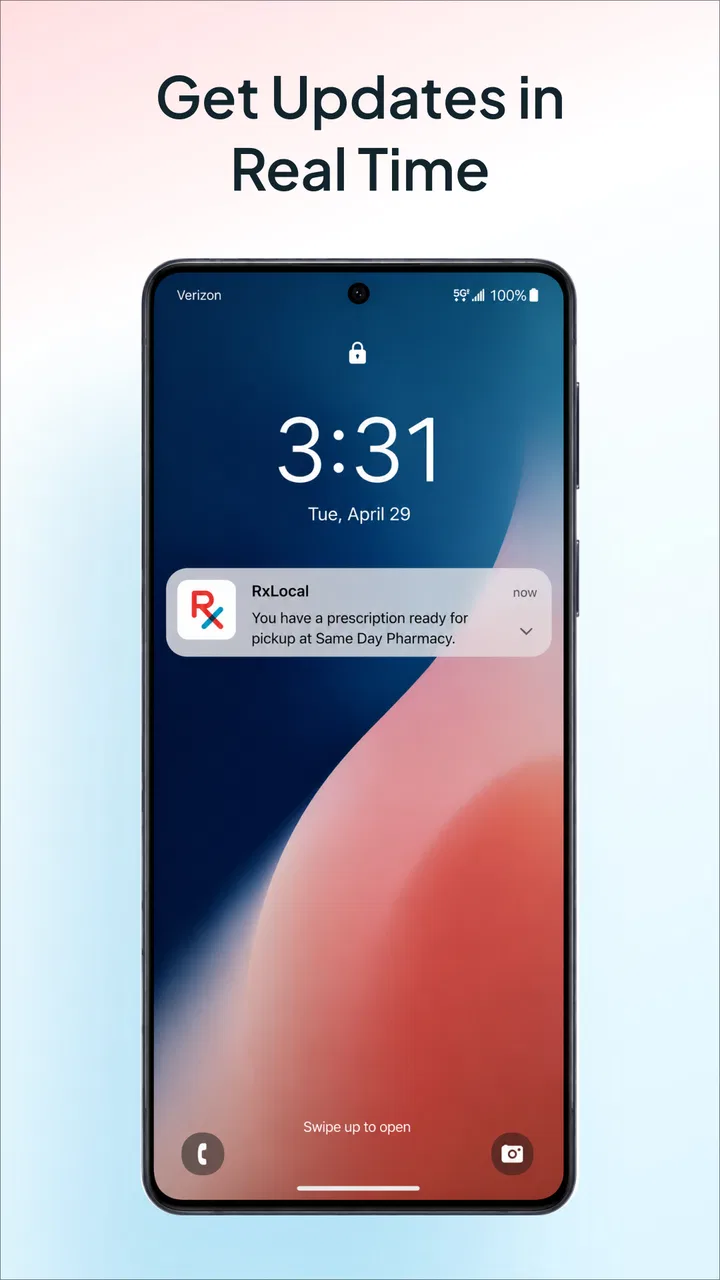
RxLocal offers several features to streamline prescription management. Users can request refills, view their prescription history, receive medication reminders, and communicate directly with their pharmacist. The app also provides notifications for when prescriptions are ready for pickup, ensuring users stay informed and organized.
05How secure is my personal information on RxLocal?
RxLocal prioritizes the security of user data. The app employs advanced encryption protocols to protect personal and medical information. Additionally, it complies with all relevant privacy regulations, such as HIPAA, to ensure that sensitive data is handled with the utmost care and confidentiality.
Pros
- User-friendly interface for easy navigation.
- Secure login with biometric authentication.
- Real-time notifications on prescription updates.
- Easy refill requests directly from the app.
- Access to pharmacy services and chat support.
Cons
- Limited to participating pharmacies only.
- Occasional glitches in notification delivery.
- No offline access to prescription history.
- In-app ads can be distracting for users.
- Some features require stable internet connection.

RxLocal
Gallery